Faceswap Deepfakes et OnlyFans : la menace et comment la combattre
Comment les deepfakes de faceswap ciblent les créateurs d’OnlyFans et les outils pratiques de détection, de retrait et juridiques qui fonctionnent réellement.
Dans cet article
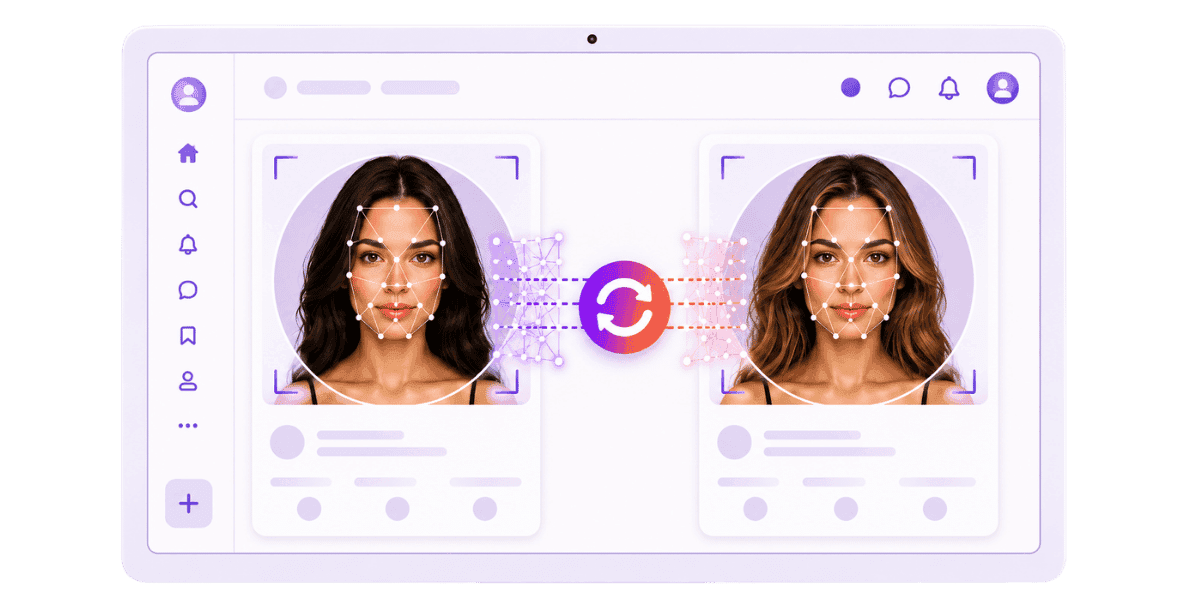
Les deepfakes Faceswap sont devenus l'une des menaces à la croissance la plus rapide pour les créateurs OnlyFans, transformant les photos publiques d'un créateur en contenu explicite non consensuel distribué sur les sites de tubes, Telegram et Reddit. La technologie est bon marché, la distribution est mondiale et le paysage juridique est encore en train de rattraper son retard. Ce guide explique comment fonctionnent les attaques de deepfake par faceswap, comment les créateurs sont généralement ciblés, les signaux de détection qui font apparaître les contrefaçons rapidement, les flux de travail de retrait qui font réellement bouger le volume, les options juridiques disponibles dans les principales juridictions et les étapes proactives qui réduisent l'exposition d'un créateur en premier lieu.
Que sont les Deepfakes Faceswap et pourquoi ils ciblent les créateurs
Les deepfakes Faceswap utilisent l'apprentissage automatique pour greffer le visage d'une personne cible sur le corps d'une autre personne dans des images fixes ou des vidéos. Les outils modernes ne nécessitent qu’un petit ensemble de photos sources et produisent des résultats convaincants en quelques minutes. Les créateurs OnlyFans sont particulièrement ciblés car ils disposent déjà d’une large empreinte publique et d’une base d’abonnés qui recherchent activement du contenu exclusif.
Comment fonctionne la technologie et pourquoi les créateurs sont des cibles privilégiées
Des outils open source gratuits, notamment DeepFaceLab, FaceFusion et SimSwap, ainsi que des services commerciaux formés sur les GPU grand public, produisent des échanges de visage crédibles en 30 à 60 minutes par vidéo. La qualité s’est fortement améliorée depuis 2022, et les contrefaçons haut de gamme sont difficiles à distinguer du contenu authentique pour les téléspectateurs occasionnels. Les créateurs publient des photos de visage de haute qualité sur les pages d'aperçu d'Instagram, Twitter/X, TikTok et OnlyFans. Les attaquants récoltent ces images pour entraîner des modèles qui produisent ensuite de faux contenus explicites. Le faux est souvent commercialisé comme une version « divulguée » des vrais OnlyFans, monétisant le nom d’un créateur sans qu’aucun revenu ne lui revienne.
Impact sur les revenus et la réputation
Au-delà du préjudice émotionnel immédiat, les deepfakes détournent le trafic des véritables OnlyFans d'un créateur, font croire aux abonnés qu'ils ont déjà vu le contenu et peuvent nuire aux futurs partenariats de marque. Les contrefaçons sont une couche de distribution pirate parallèle qui fonctionne indépendamment des canaux de fuite standard et nécessite sa propre infrastructure de détection et de retrait.
Repérer les Deepfakes Faceswap dès le début
La détection représente la moitié de la bataille. Plus un deepfake est identifié tôt, plus son empreinte de distribution est réduite au moment où le processus de retrait commence. La plupart des contrefaçons se propagent de manière agressive au cours des premières 24 à 48 heures ; les attraper dans cette fenêtre limite considérablement l’audience totale.
Des témoignages visuels qui persistent
Recherchez les lignes de cheveux mal alignées, les tons chair dépareillés au niveau de la mâchoire, le scintillement lorsque la tête tourne, les reflets artificiels des yeux et l'éclairage incohérent entre le visage et le corps. Ces artefacts sont plus subtils qu’avant, mais un œil exercé détecte la plupart des contrefaçons quelques secondes après leur examen. Les fausses vidéos sont plus faciles à repérer que les images fixes, car le mouvement crée des transitions que les modèles de génération gèrent mal ; les cadres où la tête tourne à plus de 30 degrés sont les endroits les plus fiables à vérifier.
Outils de détection et recherche d'images inversées
Des services de détection spécialisés, notamment Sensity et Deepware, peuvent aider à signaler les échanges de visages générés, mais ils doivent être traités dans le cadre d'un processus d'examen plus large plutôt que comme une réponse finale. Pour les créateurs,Détection des deepfakes OnlyFans fonctionne mieux lorsque les outils automatisés, les contrôles manuels et la documentation des preuves sont utilisés ensemble. Pour une détection manuelle accessible, effectuez des recherches d'images inversées trimestrielles sur PimEyes, Google Images et TinEye en utilisant vos propres photos de visage. Les services de surveillance continue automatisent ce processus, vous alertant lorsque de nouvelles images correspondant à votre image apparaissent, qu'elles soient réelles ou générées. Les escroqueries générées par l’IA utilisent de plus en plus la technologie deepfake ainsi que d’autres tactiques frauduleuses. Le contenu Deepfake fait souvent partie d’un Arnaques à l’IA OnlyFans, où de faux comptes, des médias générés, des usurpations d'identité et des messages automatisés sont utilisés ensemble pour cibler les créateurs.
Dépôt de retraits pour du contenu Deepfake
Les suppressions de deepfakes se situent à l’intersection des droits d’auteur, des droits à l’image et des politiques de harcèlement spécifiques à la plateforme. La plupart des grandes plates-formes traitent désormais les deepfakes non consensuels comme pouvant être supprimés pour plusieurs raisons, mais l'avis de retrait doit faire référence à la bonne politique pour agir rapidement.
Copyright Stratégie DMCA et politiques spécifiques à la plateforme
Si le deepfake a été formé sur ou utilise directement des images protégées par le droit d'auteur de votre visage provenant de publications Instagram ou de contenu OnlyFans, une notification DMCA est la voie initiale la plus efficace. Référencez les images sources, répertoriez les URL en infraction et utilisez un Générateur de modèles de notification DMCA préparer l'avis dans le bon format. Reddit, X/Twitter, Telegram, Pornhub, XVideos et la plupart des principaux sites de tubes ont également des politiques explicites et non consensuelles en matière de deepfake ; le signalement dans la catégorie dédiée aux abus est souvent plus rapide que le DMCA seul.
Désindexation des moteurs de recherche
Même une fois le contenu supprimé à la source, les moteurs de recherche peuvent continuer à proposer des miniatures et des extraits de code en cache. Soumettez les demandes de suppression à Google et Bing en utilisant leurs informations personnelles respectives et les flux de suppression DMCA. La désindexation a souvent autant d'impact que la suppression de la source, car elle coupe la couche de découverte qui dirige la plupart du nouveau trafic vers de faux contenus. La plupart des créateurs qui gèrent des incidents de deepfake rapportent systématiquement que l'étape de désindexation de la recherche est celle qu'ils oublient le plus souvent, et c'est celle qui maintient le trafic entrant vers les contrefaçons en vie le plus longtemps après la suppression de la source.
Options juridiques et paysage de l’application des Deepfakes
Les cadres juridiques pour les deepfakes non consensuels se durcissent dans le monde entier. Connaître les points de levier dans votre juridiction transforme les retraits de demandes polies en demandes exécutoires et ouvre des options que les rapports d'abus de plateforme ne peuvent pas atteindre.
États-Unis
Plusieurs États américains (Californie, Texas, Virginie, New York, Illinois) ont des lois spécifiques criminalisant les deepfakes non consensuels ou prévoyant des recours civils. Les propositions fédérales avancent. En plus des revendications en matière de droits d'auteur et de droit à la publicité, les créateurs américains disposent de véritables options juridiques.
Union européenne et Royaume-Uni
La loi de l’UE sur les services numériques et la loi britannique sur la sécurité en ligne imposent toutes deux aux plateformes l’obligation de supprimer les images intimes non consensuelles, y compris les deepfakes. Les créateurs de l’UE et du Royaume-Uni peuvent tirer parti de ces obligations pour pousser les plateformes vers des retraits plus rapides.
Quand engager un avocat
L’intervention d’un avocat est justifiée lorsque les contrefaçons sont largement répandues, lorsque le créateur derrière la contrefaçon est identifiable et possède des actifs, ou lorsqu’une cessation formelle est nécessaire pour avoir un réel poids juridique. Le seuil est inférieur à ce que pensent la plupart des créateurs ; une seule lettre d’avocat déplace souvent les plateformes et les opérateurs pirates plus rapidement qu’une pile de notifications auto-déposées, car elle signale une véritable infrastructure juridique derrière la demande. Dans ces cas, le droit Mentions légales OnlyFans Cela dépend si l’objectif est l’expulsion, la préservation des preuves, un cessez-le-feu ou une escalade formelle.
Réduire votre exposition aux Deepfakes
Une prévention totale est impossible car votre visage est forcément public en tant que créateur. Mais quelques habitudes spécifiques réduisent considérablement la quantité de matières premières avec laquelle les attaquants doivent travailler et la possibilité de découvrir les contrefaçons créées.
Gérez l'empreinte photo de votre visage et l'hygiène de votre identité
Évitez de publier des séries de photos de visages multi-angles à ultra haute résolution, parfaitement éclairées, sur les réseaux sociaux publics. La variété de l'angle, de l'expression et de l'éclairage des photos promotionnelles rend la génération plus difficile et la qualité de sortie inférieure. Le filigrane du contenu promotionnel avec des identifiants subtils et difficiles à supprimer aide les outils de détection à retracer les contrefaçons jusqu'à leurs images sources. Même avec Protection de l’identité OnlyFans au niveau de la plateforme, l’exposition aux médias sociaux publics, aux courtiers en données et au manque d’hygiène de la vie privée doit encore être gérée séparément.
Surveillance continue et détection de modèles
Une surveillance continue détecte les contrefaçons en quelques heures plutôt qu'en quelques mois, ce qui fait la différence entre un incident mineur et un événement de distribution important. Un service professionnel de surveillance et de retrait combine la reconnaissance d'images, la détection de deepfake et l'envoi de DMCA en un seul flux de travail, éliminant ainsi le besoin de coordonner manuellement entre des outils distincts.
Gérer l'impact émotionnel et RP
Les deepfakes constituent une violation unique car ils créent un contenu que la victime n'a jamais produit et auquel elle n'a jamais consenti. La réponse opérationnelle est nécessaire ; la réponse émotionnelle compte tout autant et ne doit pas être considérée comme secondaire par rapport aux étapes tactiques.
Santé mentale et communication avec les abonnés
Des communautés de créateurs et des ressources en santé mentale spécialisées dans les abus basés sur l'image existent pour cette situation. Pour les créateurs confrontés au stress, à l'exposition ou au harcèlement,Santé mentale des créateurs OnlyFans doivent être traités comme faisant partie du processus de récupération, et non comme quelque chose de distinct de la suppression du contenu. Si un deepfake atteint votre base de fans, adressez-vous-y directement : les images ne sont pas réelles, n’ont pas été produites par vous et vous les faites activement supprimer. La fidélité des abonnés se renforce presque toujours après une communication honnête.
Documentation à long terme
Conservez des enregistrements complets de chaque incident de deepfake, de chaque retrait déposé et de chaque correspondance juridique. La documentation devient l'ensemble des preuves si vous décidez plus tard d'engager une action en justice ou si une tendance se développe avec un récidiviste spécifique.
Création d'un workflow de défense Deepfake répétable
Les réponses ponctuelles aux deepfakes s’épuisent rapidement et laissent les créateurs réactifs plutôt que protégés. Un flux de travail reproductible transforme une épreuve chaotique en opérations de routine et évite que chaque nouvel incident ne semble catastrophique.
Surveillance hebdomadaire et modèles prédéfinis
Planifiez une surveillance hebdomadaire de 30 minutes couvrant la recherche d'images inversées, la vérification des mots clés des sites de fuite et l'écoute sociale du nom de votre créateur. La plupart des contrefaçons apparaissent sous des motifs reconnaissables ; les trouver rapidement raccourcit le cycle de nettoyage et empêche la distribution d’atteindre une masse critique. Conservez les notifications DMCA, les rapports de harcèlement et les demandes de désindexation des moteurs de recherche pré-remplis avec les informations de votre créateur afin que lorsqu'un nouveau faux apparaît, vous n'ayez qu'à remplir les URL spécifiques.
Associez-vous à un service professionnel
Une fois que le volume de surveillance hebdomadaire dépasse quelques heures par semaine, un partenaire de protection continue du contenu est rentabilisé. L'économie passe d'une deuxième tâche à un poste dans le budget de fonctionnement, et la vitesse de retrait s'améliore considérablement par rapport aux flux de travail manuels.
De la détection à la suppression : gestion des Deepfakes Faceswap
Les deepfakes Faceswap ne vont pas disparaître ; la technologie est trop bon marché et trop accessible. Ce que les créateurs peuvent contrôler, c'est la rapidité avec laquelle les contrefaçons sont détectées, l'efficacité avec laquelle elles sont supprimées et le degré d'exposition que leur empreinte faciale personnelle crée en premier lieu. Une combinaison de surveillance, de retraits rapides, d'escalade juridique lorsque cela est justifié et d'hygiène disciplinée de l'image réduit l'impact de chaque incident.
Les créateurs qui gèrent les deepfakes les traitent mieux comme une réalité opérationnelle et non comme une crise existentielle. Avec les bons outils et partenaires en place, même les contrefaçons sophistiquées peuvent être détectées en quelques jours et supprimées en quelques semaines, et la plupart n’atteignent jamais une masse de distribution critique.
Prêt à protéger votre précieux contenu ?Commencez à protéger votre contenu avec Enforcity.
Protégez Votre Contenu
- Détection de fuites 24h/24
- Retraits DMCA automatisés
- Protection spécifique OnlyFans
- Alertes de surveillance en temps réel
Questions Fréquemment Posées
Vous n'avez pas trouvé de réponse ?
Emily
Stratégiste en Contenu Numérique
Emily est une spécialiste de la protection de contenu numérique avec plus de 5 ans d'expérience aidant les créateurs à protéger leur travail en ligne. Elle se spécialise dans l'application du DMCA et les stratégies de retrait spécifiques aux plateformes.
Protégez Votre Contenu
- Détection de fuites 24h/24
- Retraits DMCA automatisés
- Protection spécifique OnlyFans
- Alertes de surveillance en temps réel
Articles Connexes
Utiliser un second téléphone déverrouillé pour OnlyFans : pourquoi et comment
Utiliser un second téléphone déverrouillé pour OnlyFans sépare le travail créateur de la vie perso. Voici comment en configurer un, quoi installer et comment le garder sécurisé.
Lire l'Article
« Detected, opinion rejected » sur OnlyFans : ce que ça veut dire et comment corriger
« Detected, opinion rejected » sur OnlyFans expliqué : ce que veut dire l'erreur, ce qui la déclenche, comment faire appel et empêcher que le même contenu soit à nouveau flaggé.
Lire l'Article
Meilleur service de protection de contenu en ligne pour les créateurs OnlyFans
Meilleur service de protection de contenu en ligne pour OnlyFans : ce qu'il faut regarder, fonctionnalités clés, modèles tarifaires et comment choisir le bon partenaire anti-piratage en 2026.
Lire l'ArticleRessources Gratuites
Protéger Votre Bien-être Mental
Les essentiels de la santé mentale pour les créateurs de contenu.

Manuel Ultime pour les Créateurs OnlyFans
Ressource complète pour tous les aspects de la réussite sur OnlyFans.

Comment Protéger Votre Contenu 🌶️ ?
Comment protéger votre contenu numérique sur plusieurs plateformes.
Comment Rester en Sécurité en Tant que Créateur ?
Conseils de sécurité essentiels pour les créateurs de contenu.
Ce Que Chaque Créateur Doit Savoir sur Ses Droits ?
Bases juridiques et droits pour les créateurs.

Comment Protéger Votre Créativité ?
Un guide indispensable pour les créateurs OnlyFans.

Glossaire pour les Créateurs de Contenu
Termes clés que chaque créateur de contenu devrait connaître.

Checklist de Sécurité du Contenu pour un Profit Maximum
Checklist pour sécuriser le contenu et optimiser les revenus.

Comment Arrêter les Fuites Instantanément ?
Protégez votre travail, prenez le contrôle et empêchez le partage non autorisé sur toutes les plateformes instantanément.