How to Sue Someone for Leaking OnlyFans Content: Legal Guide
How to sue someone for leaking OnlyFans content by understanding copyright law, gathering evidence, and choosing between small claims and federal court.
In this article
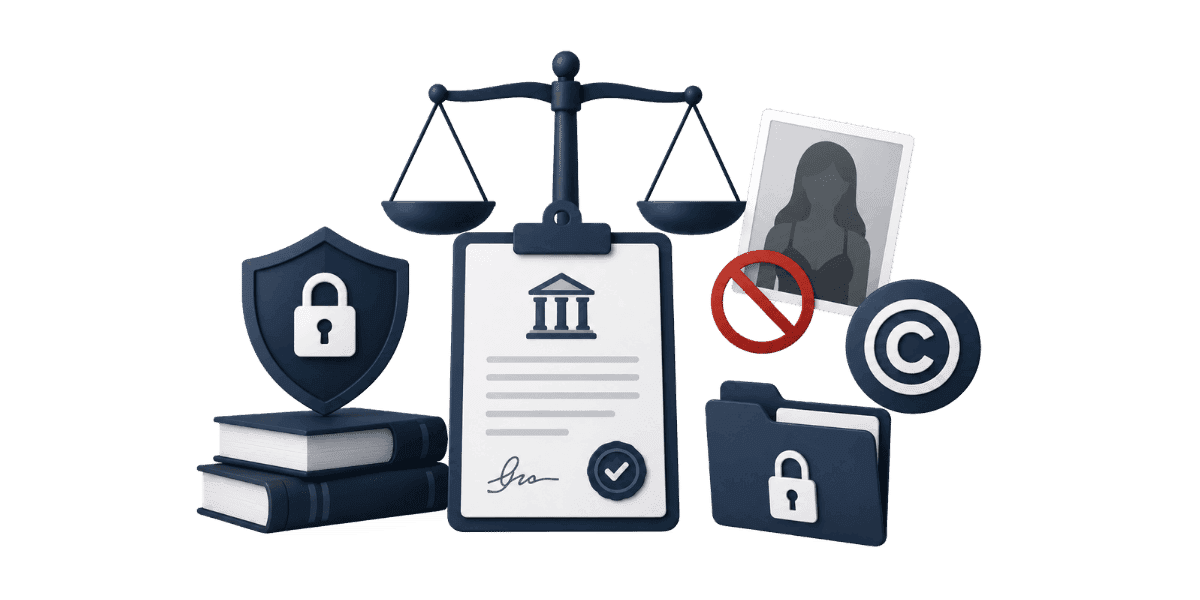
To sue someone for leaking your OnlyFans content: register your copyright, document the infringement thoroughly, and file either through the Copyright Claims Board for claims under $30,000 or federal court for larger claims. Suing a content leaker involves navigating copyright law, building a strong evidence file, and choosing the right legal venue. This guide walks you through the entire legal process for pursuing a lawsuit against someone who has distributed your OnlyFans content without authorization.
Understanding Copyright Law and OnlyFans Content
Before filing a lawsuit, you need to understand the legal framework that protects your work. Copyright law is the foundation of any legal claim you bring against a content leaker, and understanding it will shape every decision you make in the process.
Automatic Copyright Protection for Creators
Under US copyright law and the Berne Convention, your original creative works are automatically protected from the moment of creation; every photo, video, and written content you publish on OnlyFans is copyrighted instantly. You do not need to register or add a copyright notice for this protection to apply, but as explained in copyright on OnlyFans, formal registration unlocks significantly more powerful legal remedies in court.
Why Copyright Registration Matters for Lawsuits?
While automatic copyright exists, filing a lawsuit in federal court for copyright infringement in the United States requires that you have registered your copyright with the U.S. Copyright Office, or at minimum applied for registration. Registration before the infringement occurs or within three months of publication unlocks your eligibility for statutory damages ranging from $750 to $30,000 per work infringed, and up to $150,000 per work for willful infringement. Without prior registration, you are limited to actual damages, which are often difficult to prove and substantially lower. The registration process costs between $45 and $65 per application and can be done online through the Copyright Office website. Learn more about this process in guide on how to register a copyright. Processing times range from three to ten months, though expedited processing is available for an additional fee when litigation is pending.
How OnlyFans Terms of Service Strengthen Your Case?
The OnlyFans terms of service explicitly state that subscribers are not permitted to download, copy, reproduce, distribute, or share creator content. When someone leaks your content, they are violating both federal copyright law and the contractual terms they agreed to when subscribing. This dual violation can strengthen your legal position because you may have grounds for both a copyright infringement claim and a breach of contract claim. Some attorneys recommend pursuing both avenues simultaneously to maximize potential recovery. The terms of service create a clear contractual obligation that the subscriber knowingly accepted, making it harder for them to claim ignorance or fair use.
Gathering Evidence Before Filing a Lawsuit
A strong evidence file is the backbone of any successful lawsuit. Courts require clear documentation, and the quality of your evidence often determines whether a case settles favorably or even reaches trial.
Documenting the Infringement
Collect evidence immediately: screenshot every instance of unauthorized content with the full URL and timestamp visible, use screen recording to capture video evidence, and save original files from your devices including metadata showing creation dates. Archive social media posts using the Wayback Machine or Archive.today before the leaker can delete them.
Identifying the Leaker
Review your subscriber list and direct messages to identify who had access to the leaked content. Watermarking OnlyFans content makes this far easier, unique marks trace leaked content directly to a specific subscriber. For anonymous leakers, your attorney can file a John Doe lawsuit and subpoena platforms to reveal account holder identities.
Calculating Your Damages
Document lost subscription revenue, tips, PPV income, sponsorship opportunities, and takedown service costs. Also document emotional distress where applicable. Keep all receipts and a timeline connecting the leak to your losses, an IP attorney can help determine the full scope of recoverable damages. Creators who have already experienced a leak can also follow the steps to take when OnlyFans content is leaked while pursuing legal action.
Finding the Right Attorney for Your Case
Choosing the right attorney significantly impacts the outcome of your case. Not every lawyer is equipped to handle digital copyright infringement cases, so finding one with relevant experience is essential.
Fee Structures and Cost Expectations
Attorney fees vary, some work on contingency taking 30-40% of recovery, others charge $200-$600 hourly. Federal court filing fees are approximately $400. In proven infringement cases, courts may award attorney fees to the prevailing party, providing additional incentive for attorneys to take strong cases.
Small Claims Court vs Federal Court
The venue where you file your lawsuit affects the timeline, costs, complexity, and potential recovery. Understanding the differences between your options helps you choose the most strategic path.
The Copyright Claims Board: A New Option
The Copyright Claims Board, established in 2022, handles copyright claims up to $30,000 without requiring an attorney. Proceedings are online, filing fees are minimal, and cases are decided by claims officers rather than judges. Note that the respondent can opt out within 60 days, requiring you to file in federal court instead.
Filing in Federal Court
Federal court is the traditional venue for copyright infringement lawsuits and is required for claims exceeding $30,000 or when seeking injunctive relief such as a court order forcing the removal of content. Federal cases are more complex, more expensive, and take longer, typically twelve to eighteen months from filing to resolution. However, federal court provides access to the full range of statutory damages up to $150,000 per work for willful infringement, injunctive relief, impoundment of infringing copies, and attorney fees. Most copyright infringement cases that reach federal court settle before trial, often after the discovery phase when both parties have exchanged evidence and the strength of each side's position becomes clear. According to legal resource Nolo (note: external link, nofollow), approximately 95 percent of federal copyright cases settle before trial. State court small claims divisions are also an option for breach of contract claims based on the OnlyFans terms of service violation, faster and less expensive than federal court with no attorney required.
Understanding Statutory Damages and Potential Recovery
One of the most powerful aspects of copyright law for content creators is the availability of statutory damages, which can provide significant financial recovery even when actual damages are difficult to prove.
How Statutory Damages Are Calculated?
Statutory damages are awarded per work infringed, not per instance of infringement. If someone leaked ten of your photos, you could potentially recover statutory damages for each individual photo. The court has discretion to award between $750 and $30,000 per work for standard infringement. For willful infringement, where the infringer knew they were violating your copyright, the court can award up to $150,000 per work. Courts consider factors such as the nature of the infringement, the infringer's intent, the financial impact on the copyright holder, and the need to deter future infringement. If you leaked ten watermarked photos that were then distributed across multiple piracy sites, the willful nature combined with the scale of distribution could result in awards at the higher end of the statutory range. Alternatively, you can elect actual damages, lost subscription revenue, tips, and any profits the infringer earned though these are harder to prove than statutory damages.
The Lawsuit Process from Filing to Resolution
Understanding the litigation timeline helps you set realistic expectations and make informed decisions throughout the process. Before filing, send a formal demand letter identifying the infringement and demanding removal and settlement, many cases resolve at this stage without going to court.
Filing and Discovery Phase
Once the complaint is filed and the defendant is served, the discovery phase begins. During discovery, both parties exchange relevant documents, answer written interrogatories, and may be deposed. This phase typically lasts three to six months in federal court. Discovery is often the most critical phase because it reveals the full extent of the infringement and can uncover additional evidence. It is also the phase where many cases settle, as the evidence exchanged during discovery clarifies the likely outcome of a trial. Your attorney may also seek temporary restraining orders or preliminary injunctions during this phase to prevent ongoing distribution of your content while the case is pending. Most cases settle during discovery when both sides assess the evidence. If not, cases proceed to trial where your attorney will advise whether jury or bench trial is more favorable.
Alternative Legal Actions Beyond Lawsuits
While a lawsuit is a powerful tool, it is not the only legal mechanism available to you. In many cases, a combination of approaches produces the best outcome.
DMCA Takedown Notices
The Digital Millennium Copyright Act provides a fast, free mechanism for removing infringing content from websites and platforms. Filing a DMCA takedown notice requires identifying the infringing content, providing proof of ownership, and submitting the notice to the platform's designated agent. Most platforms comply within 24 to 72 hours. While DMCA takedowns do not provide financial compensation, they stop the immediate damage of ongoing distribution. You can file DMCA takedowns simultaneously while pursuing a lawsuit. Using a professional OnlyFans DMCA takedown service can handle the volume of takedowns needed while you focus on the legal case. The fact that the infringer received and ignored DMCA notices can also be used as evidence of willful infringement in your lawsuit, potentially increasing your statutory damage award.
Criminal Referral for Serious Cases
For large-scale piracy or content distributed as part of harassment or extortion, criminal copyright infringement charges may apply. Many states also have revenge porn laws criminalizing non-consensual distribution of intimate content. File a police report to create an official record, criminal convictions support your civil case. Creators dealing with harassment alongside content leaking should also review content creator harassment on OnlyFans, criminal referral and harassment reporting can proceed simultaneously.
Taking Legal Action Against OnlyFans Content Leakers
Suing someone for leaking your OnlyFans content can result in significant financial recovery and deter future infringement. Register your copyrights early, document the infringement thoroughly, and consult an IP attorney, statutory damages up to $150,000 per work make copyright infringement lawsuits viable for creators at every income level.
Ready to take the first step in protecting your content and your livelihood? Sign up for Enforcity to get automated content monitoring and DMCA takedown services that build the evidence trail you need while removing leaked content across the internet.
Protect Your Content
- 24/7 leak detection
- Automated DMCA takedowns
- OnlyFans-specific protection
- Real-time monitoring alerts
Frequently Asked Questions
Couldn't find an answer?

Emily
Digital Content Strategist
Emily is a digital content protection specialist with over 5 years of experience helping creators safeguard their work online. She specializes in DMCA enforcement and platform-specific takedown strategies.
Protect Your Content
- 24/7 leak detection
- Automated DMCA takedowns
- OnlyFans-specific protection
- Real-time monitoring alerts
Related Articles
How to Withdraw Money from OnlyFans: A Human-Friendly Guide for Creators
Learn how to withdraw money from OnlyFans with this complete guide. Discover payout options, processing times, common issues, and how to keep your earnings secure.
Read Post
Wheelchair OnlyFans Success Guide
Discover how disabled creators thrive on OnlyFans, breaking stereotypes, inspiring communities, and promoting inclusivity. Learn Wheelchair OnlyFans niche details.
Read Post
What You Need to Know Before Starting OnlyFans: Essential Tips and Strategies
Thinking about joining OnlyFans? Discover What You Need to Know Before Starting OnlyFans? Essential tips, strategies, and insights to maximize your success, protect your content, and grow your fanbase effectively. Start your journey with confidence!
Read PostFree Resources

Protecting Your Mental Wellness
Mental health essentials for content creators.

Ultimate Handbook for OnlyFans Creators
Comprehensive resource for all aspects of OnlyFans success.

How to Safeguard Your 🌶️ Content?
How to safeguard your digital content across multiple platforms.
How to Stay Safe as a Creator?
Essential safety tips for content creators.

What Every Creator Needs to Know About Their Rights?
Legal basics and rights for creators.

How to Protect Your Creativity?
A must-have guide for OnlyFans creators.

Glossary for Content Creators
Key terms every content creator should know.

Content Security Checklist for Maximum Profit
Checklist for securing content and optimizing earnings.
How to Stop Leaks Instantly?
Protect your work, take control, and prevent unauthorized sharing across platforms instantly.