Can People Catfish on OnlyFans? Understanding Identity Fraud and Protection
Can people catfish on OnlyFans using stolen identities and fake verification? Learn how catfishing works, platform protection measures, signs of fake accounts, and how to protect yourself from identity theft and impersonation.
In this article
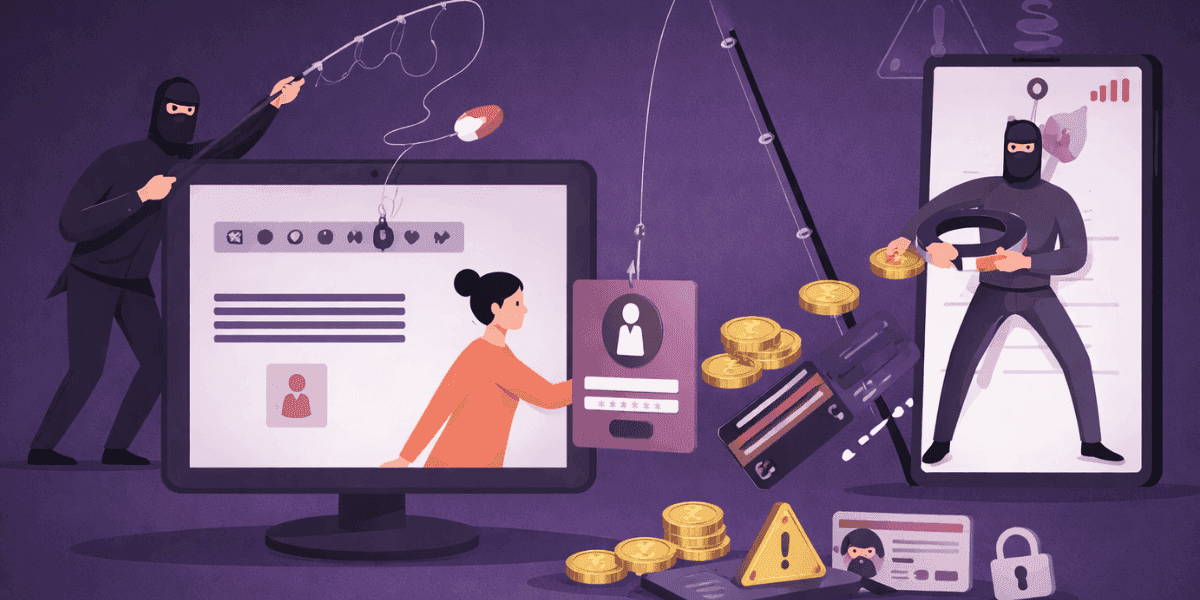
Can people catfish on OnlyFans is a concerning question as identity fraud and impersonation affect both creators and subscribers on the platform. While OnlyFans requires identity verification for creators, determined catfishers exploit verification loopholes, use stolen identities, or impersonate real creators through fake accounts. Understanding how catfishing works, recognizing warning signs, and implementing protection strategies helps both creators safeguard their identities and subscribers avoid falling victim to fraudulent accounts stealing money through deception.
How Catfishing Works on OnlyFans?
Yes, Catfishing Happens on OnlyFans:Despite verification requirements, catfishers create accounts using stolen photos, fake identities, or impersonate real creators. Common catfishing methods include:
Stolen Identity Verification:Catfishers use stolen IDs and photos to pass platform verification, creating accounts under false identities.
Content Theft and Impersonation:Scammers steal photos and videos from real creators, establishing fake accounts that impersonate legitimate creators.
Fake Collaborations:Catfishers claim to be one person during verification but post content of someone else entirely.
Bait-and-Switch:Accounts verify with real photos but post entirely different people's content after gaining subscribers.
Review broader catfishing on social media tactics that translate to OnlyFans.
OnlyFans Verification and Its Limitations
OnlyFans requires creators to complete verification before posting content or receiving payments. The process involves:
- Government-issued ID submission
- Selfie holding ID next to face
- Banking information matching ID name
Verification Limitations:
While verification confirms the account holder submitted valid identification, it doesn't guarantee:
- The content posted belongs to the verified person
- Photos and videos feature the account holder
- The creator isn't using someone else's identity
OnlyFans verifies identity for legal and financial compliance but doesn't verify every piece of content matches the verified person. This gap allows catfishing when scammers verify with stolen IDs or post other people's content. Understand OnlyFans verification processes and their limitations.
Signs of Catfish and Fake Accounts
Subscribers and creators should watch for these catfish indicators:
Mismatched Content:Photos and videos show different people, inconsistent appearances, or clearly come from multiple sources.
Refusal to Verify:Won't provide custom verification photos, video calls, or real-time proof they're the person in content.
Inconsistent Details:Stories, backgrounds, or personal details change or contradict previous statements.
No Live Content:Never posts live streams, real-time videos, or time-stamped content proving current identity.
Aggressive Sales Tactics:Pushes immediate purchases, discourages questions, or creates urgency to prevent verification.
What to Do If Someone Catfishes Using Your Identity?
Watermark All Content:Add visible watermarks with your username to all photos and videos, making theft and reuse obvious.
Monitor for Impersonation:Regularly search your name, username, and photos across OnlyFans and other platforms to find fake accounts using your identity.
Implement Content Protection:Use professional protection services that monitor for content theft and impersonation attempts.
Verify Subscriber Requests:If subscribers mention seeing you on other platforms or accounts, investigate immediately.
Copyright Your Content:Understand your copyright rights on OnlyFans to take legal action against impersonators.
Alert Your Audience:Regularly remind followers about your only official accounts and how to verify authenticity.
Platform Responsibility and Subscriber Protection
Document the Impersonation:Screenshot the fake account, content they're using, and any communications before they delete evidence.
Report to OnlyFans:File impersonation reports through OnlyFans support with evidence showing they're using your identity.
DMCA Takedowns:File copyright infringement claims for stolen content. Learn about DMCA vs cease and desist options.
Professional Assistance:Consider working with services specializing in OnlyFans content removal and impersonation takedowns.
Review what to do if you're getting catfishing targeting you.
How to Verify Authentic OnlyFans Creators?
Verifying an OnlyFans creator's authenticity requires systematic investigation across platforms. Cross-platform consistency represents the strongest indicator authentic creators maintain consistent branding, photos, and activity across OnlyFans, Instagram, and Twitter.
Verification Methods:
- Reverse image search profile photos on Google Images or TinEye
- Check social media accounts for recent posts and genuine engagement
- Request custom verification content with specific details
- Look for OnlyFans verified badge confirming platform identity check
- Examine consistent content quality, posting patterns, and subscriber engagement
Legal Consequences of Catfishing on OnlyFans
Catfishing on OnlyFans carries serious legal consequences beyond terms of service violations, including criminal charges, civil lawsuits, and substantial financial penalties.
Copyright infringement occurs with each stolen photo or video uploaded. Each piece represents a separate violation, creating liability for thousands of dollars per infringed work. Professional photographers and models increasingly pursue legal action throughOnlyFans DMCA takedown processesand cease-and-desist letters.
| Legal Violation | Type | Potential Penalties |
|---|---|---|
| Wire Fraud (Federal) | Criminal | Up to 20 years prison, fines up to $250,000 |
| Online Impersonation | Criminal (state-level) | 1-5 years prison, fines $1,000-$10,000 (varies by state) |
| Copyright Infringement | Civil/Criminal | $750-$150,000 per work infringed, plus attorney fees |
| Fraud and Misrepresentation | Civil | Return of all funds obtained + damages + attorney fees |
| Theft of Services | Criminal | Misdemeanor to felony depending on amount, restitution |
Platform consequences compound legal risks. OnlyFans permanently bans catfish accounts and cooperates with law enforcement investigations, providing payment records, IP addresses, and bank account information that identify perpetrators.
Platform Detection and Prevention Systems
OnlyFans employs multiple detection systems designed to identify and prevent catfishing, though determined fraudsters sometimes evade initial safeguards.
Identity verification requires all creators to submit government-issued photo ID and selfie before receiving payouts. Facial recognition technology compares verification selfies to posted content, flagging accounts where the verified person doesn't appear in actual content.
Manual review teams investigate flagged accounts and subscriber reports, examining suspicious profiles and making final suspension decisions. Verification badges indicate accounts completing additional verification beyond basic ID submission.
Despite these systems, sophisticated catfish accounts still emerge. OnlyFans continuously updates detection algorithms, but fraudsters adapt tactics. Subscribers should remain vigilant and recognize scam behavior patterns, while creators should track OnlyFans account analytics to detect unauthorized activity.
What to Do If You Encounter a Catfish
Discovering you've subscribed to a catfish account is frustrating and potentially costly, but taking systematic action protects you financially and helps prevent the catfish from victimizing others.
Report the account to OnlyFans directly through the platform's report function.Select "Impersonation" or "Fraud" as the violation type and provide detailed explanation with your documentation.
Request a refund through OnlyFans support.Contact support immediately explaining the situation and providing evidence of catfishing. OnlyFans policies vary on refunds for fraudulent accounts, but they may refund recent subscription payments when clear fraud is demonstrated.
| Action Step | Priority | Expected Outcome | Timeline |
|---|---|---|---|
| Screenshot all evidence | Immediate | Preserved documentation for all subsequent actions | Do immediately before reporting |
| Report to OnlyFans | Immediate | Account investigation, potential suspension | Investigation 2-7 days |
| Request refund from OnlyFans | High | Possible refund of recent charges | Response in 3-10 business days |
| Dispute charge with bank/card | Medium | Chargeback if OnlyFans denies refund | 30-60 days for resolution |
| Report to FTC (if US-based) | Medium | Contributes to fraud pattern tracking | No direct outcome for individual |
Protecting Yourself as a Creator from Impersonation
Catfish accounts using your photos damage your reputation when subscribers discover fraud, reduce earnings as fake accounts compete for your audience, and create legal complications.
Watermark all content with your username and branding.Position watermarks centrally where they cannot be easily cropped out, using semi-transparent overlays that clearly mark content as yours without ruining aesthetics.
Monitor for impersonation accounts regularly using reverse image search tools.Upload your promotional photos to Google Images, TinEye, and other reverse image search engines monthly to identify unauthorized uses.
- Use unique poses or backgrounds:Develop signature visual elements harder to replicate without obvious copying
- Post current timestamps occasionally:Include newspapers, dates, or current events in photos proving content is recent and original
- Engage with your community:Regular subscriber interaction creates relationships catfish accounts cannot replicate
- Display verification badges:Complete OnlyFans verification and display badges prominently
Take immediate action when discovering impersonation accounts.Report catfish accounts to the platforms where they appear (OnlyFans, Instagram, Twitter, etc.) using impersonation report functions.Generate professional DMCA noticesto enforce your copyright. Many platforms respond quickly to copyright infringement claims from verified rights holders.
Future of Identity Verification on OnlyFans
The ongoing battle against catfishing on OnlyFans drives continuous evolution in identity verification technology and platform policies. Understanding emerging verification methods and anticipated changes helps creators and subscribers prepare for a more secure but potentially more restrictive future for content platforms.
Blockchain-based identity verificationoffers promising solutions for creator authentication without compromising privacy. Decentralized identity systems could allow creators to verify their authenticity across multiple platforms using cryptographically secure credentials without repeatedly submitting sensitive documents.
| Emerging Technology | Timeline | Privacy Impact | Effectiveness Against Catfishing |
|---|---|---|---|
| Advanced Facial Recognition | Currently rolling out | Medium (requires more frequent biometric data submission) | Very High (90%+ catfish detection) |
| Liveness Detection Video | 1-2 years | Medium-High (real-time video submission) | Very High (prevents pre-recorded fraud) |
| Blockchain Identity | 3-5 years | Low (decentralized, user-controlled) | High (cryptographically verifiable) |
| AI Deepfake Detection | Currently improving | Low (automated analysis) | High (identifies synthetic content) |
| Third-Party Verification Services | Currently available | High (submitting documents to external companies) | Very High (professional verification) |
Ready to protect your authentic creator identity?Get comprehensive monitoring and takedown services with Enforcityto detect impersonation accounts using your content, remove unauthorized copies, and maintain your exclusive brand across all platforms.
Protect Your Content
- 24/7 leak detection
- Automated DMCA takedowns
- OnlyFans-specific protection
- Real-time monitoring alerts
Frequently Asked Questions
Couldn't find an answer?

Emily
Digital Content Strategist
Emily is a digital content protection specialist with over 5 years of experience helping creators safeguard their work online. She specializes in DMCA enforcement and platform-specific takedown strategies.
Protect Your Content
- 24/7 leak detection
- Automated DMCA takedowns
- OnlyFans-specific protection
- Real-time monitoring alerts
Related Articles
How to Withdraw Money from OnlyFans: A Human-Friendly Guide for Creators
Learn how to withdraw money from OnlyFans with this complete guide. Discover payout options, processing times, common issues, and how to keep your earnings secure.
Read Post
Wheelchair OnlyFans Success Guide
Discover how disabled creators thrive on OnlyFans, breaking stereotypes, inspiring communities, and promoting inclusivity. Learn Wheelchair OnlyFans niche details.
Read Post
What You Need to Know Before Starting OnlyFans: Essential Tips and Strategies
Thinking about joining OnlyFans? Discover What You Need to Know Before Starting OnlyFans? Essential tips, strategies, and insights to maximize your success, protect your content, and grow your fanbase effectively. Start your journey with confidence!
Read PostFree Resources

Protecting Your Mental Wellness
Mental health essentials for content creators.

Ultimate Handbook for OnlyFans Creators
Comprehensive resource for all aspects of OnlyFans success.

How to Safeguard Your 🌶️ Content?
How to safeguard your digital content across multiple platforms.

How to Stay Safe as a Creator?
Essential safety tips for content creators.

What Every Creator Needs to Know About Their Rights?
Legal basics and rights for creators.

How to Protect Your Creativity?
A must-have guide for OnlyFans creators.

Glossary for Content Creators
Key terms every content creator should know.

Content Security Checklist for Maximum Profit
Checklist for securing content and optimizing earnings.

How to Stop Leaks Instantly?
Protect your work, take control, and prevent unauthorized sharing across platforms instantly.